
Summary
In this interview, Justin Huhn, founder of Uranium Insider, explains why he believes mine supply cannot respond fast enough to meet reactor demand through the early 2030s, and why utilities will pay far higher prices rather than curtail operations. He walks through the arithmetic of the supply gap, the economics that make uranium a small share of nuclear operating costs, the entry of hyperscalers into the fuel cycle, and how his firm trades the sector's volatility around a long-term bullish position.
Transcript
Key Takeaways:
- Supply Response Lags Demand: Huhn says mine supply has risen from roughly 135–140 million pounds five years ago to nearly 175 million pounds last year, but demand has grown from 165 million to 200 million pounds over the same period. He notes there are around 30 uranium mines globally and very few projects in development, leaving little flexibility compared with oil, where OPEC decisions and strategic reserves can move the market within days.
- Development Timelines: He points to NexGen Energy's Arrow deposit as the clearest illustration — discovered around 2015, still without a shovel in the ground, with a four-and-a-half to five-year build ahead of it. On that path, first production lands around 2032–2033, roughly 20 years from discovery for what he calls the best uranium asset ever found.
- Fuel Cost Insensitivity: Huhn estimates total fuel is about 15% of a nuclear plant's operating cost, with uranium roughly half of that — historically 4%, now closer to 6–8%. He contrasts this with natural gas plants, where fuel runs 80–85% of operating cost, and says utilities are signing market-referenced contracts with ceilings at $140–$160 and will pay them. He cites the Palisades restart decision, where he says the uranium price never entered the discussion.
- Contracting Window: He says 80–85% of uranium volume is procured through long-term contracts, and that utilities are currently covering the 2027–2033 delivery period. He adds that he has heard of entities contracting Russian enrichment as far out as 2041, after the US ban is set to expire.
- Fleet Life Extensions and Restarts: Every US reactor that has applied for a life extension has received one, in Huhn's account, and he expects every reactor in the country to run to at least 60 years with most reaching 80. He cites the California Coastal Commission's approval for an additional 15 years at Diablo Canyon following the earlier emergency extension, and points to restart interest at a recently shut Taiwanese reactor and Belgium's interest in acquiring shutdown reactors from French operators.
- Hyperscalers Entering the Fuel Cycle: Huhn says hyperscalers are now poking around the fuel cycle directly, citing Amazon's investment in X-energy and reports that NexGen has been approached about project finance tied to a uranium offtake. He reads this as evidence that deep-pocketed buyers could end up competing with nuclear utilities for material across the fuel cycle. He also notes OPG issued a uranium RFP in 2024 for the Darlington BWRX-300s, six years before expected first criticality.
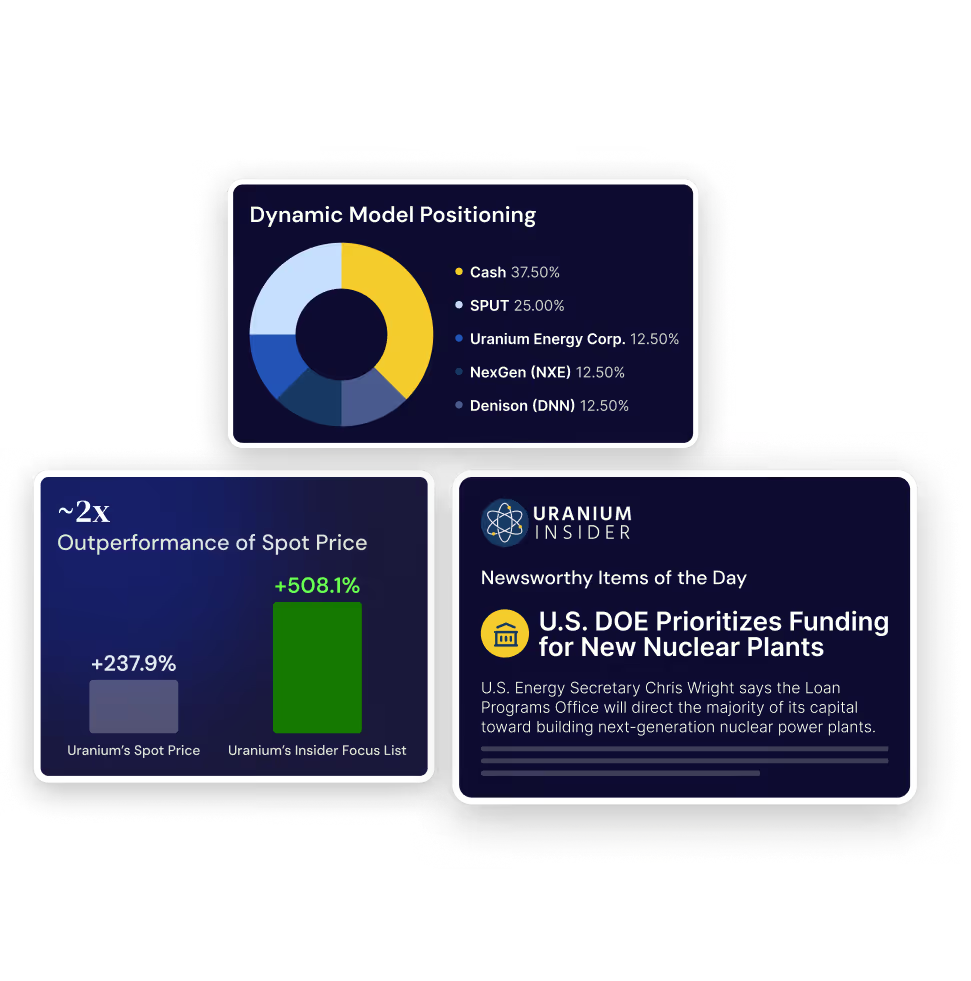
- Trading the Volatility: Huhn describes a trading portfolio launched last February that he says has roughly doubled and outperformed the sector ETFs by 50–60%, driven by physical market activity, sentiment, and technicals rather than NPV analysis. He characterizes the March–April period, with spot at $63–64 and RSI near 24, as a clear capitulation bottom, and says conditions today are mid-range — the firm is net long but holding a sizable cash position.


.avif)
