
Summary
In this interview, Justin Huhn, founder of Uranium Insider, explains why a persistent gap between mine supply and reactor demand — roughly 30 million pounds last year — has repriced uranium from its 2019 lows and left the market without an obvious release valve. He walks through shrinking secondary supply, the pounds locked up in physical trusts, a modelled 50% demand increase by 2035, and the two scenarios that would break the thesis.
Transcript
Key Takeaways:
- Supply Shortfall: Huhn puts last year's reactor demand at roughly 200 million pounds against about 170 million pounds mined, a shortfall he says has now run for multiple years. He traces the price response from a 2019 bottom of $18 a pound through two spikes above $100 to a current level of $85–90.
- Shrinking Secondary Supply: Enrichment underfeeding contributes an estimated 8 to 10 million pounds a year, and utility inventories provide a buffer given the two-year fuel cycle. Huhn notes total secondary supply has fallen from nearly 30 million pounds a year five or six years ago to under 10 million.
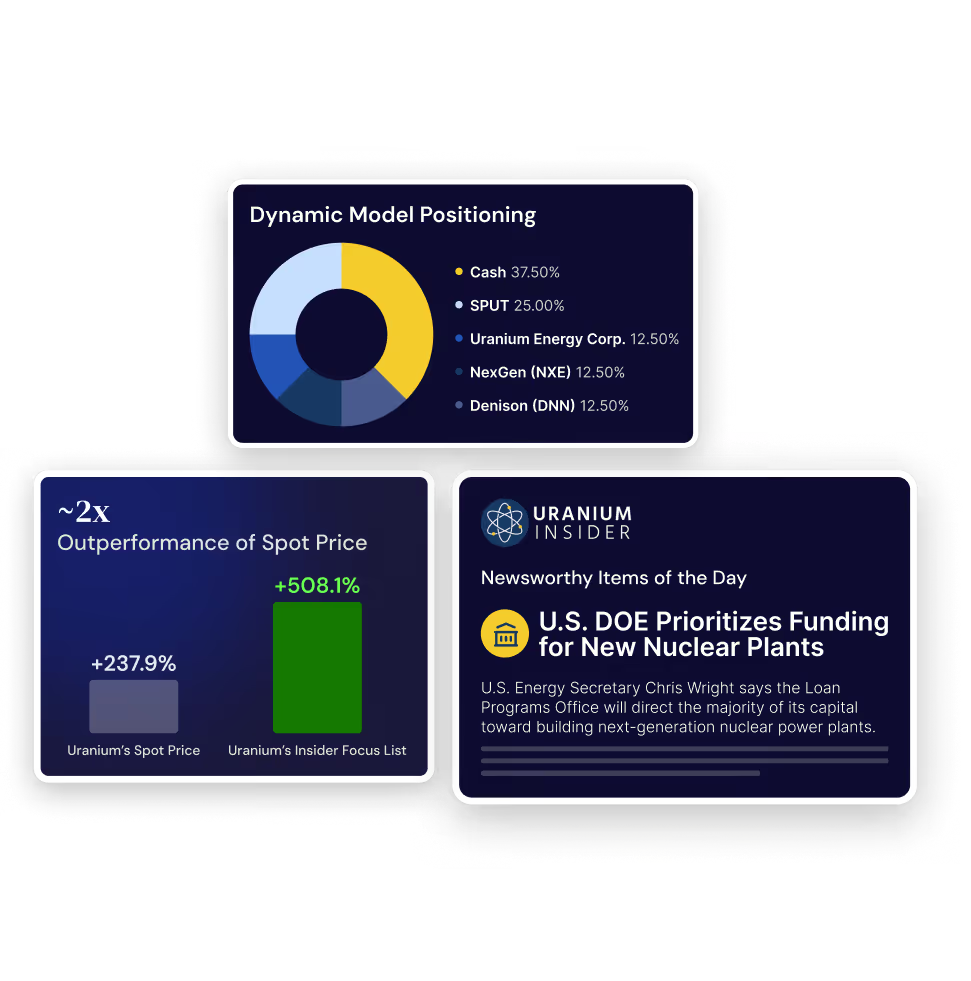
- Pounds Held Off Market: Sprott Physical Uranium Trust purchased almost 9 million pounds in 2025 and Yellow Cake plc a little over a million, with SPUT adding more than 5 million pounds so far this year on over $400 million of January inflows. Huhn describes the roughly 80 million pounds SPUT holds as effectively removed from circulation, returnable only through a buyout requiring a two-thirds shareholder vote.
- Demand Growth to 2035: Huhn says the 50% demand increase in his models is high-confidence because it rests on reactors currently operating, under construction, or likely to be life-extended rather than speculative builds. That projection captures primary demand only.
- Right-Tail Demand Drivers: Sovereign stockpiling — already underway in China — inventory restocking, and further financial buying sit outside the model entirely. Huhn points to US utilities holding about two years of inventory and EU utilities about three, and argues rising prices often pull utilities into buying rather than sidelining them.
- Fuel Cost Tolerance: Uranium accounts for roughly 5 to 6% of a US reactor's total operating cost, and the full fuel cycle including conversion, enrichment, and fabrication about 15%. On that basis Huhn argues operators could absorb prices several multiples higher, since the fuel has no substitute and the assets cannot be idled.
- Downside Risks: Huhn identifies a conventional supply response as the eventual bear case, though he sees the development timelines for phosphate or seawater extraction as too long to affect the physical market near term. The larger risk in his view is another nuclear accident, citing Fukushima's aftermath — 54 Japanese reactors shut over 24 months and phase-out policies in Japan, Spain, and Belgium — as demand destruction rather than a supply event.


.avif)
